
Comprehensive Verification Solutions for Your Business

Comprehensive Checks, Searches, and Verification Services
Private investigators offer checks, searches, and verification services, including background checks (criminal and civil records, employment history, education verification), ID verification, vehicle registration checks, and RICA searches (for telecommunication details). They also provide services like income and asset verification, company and BEE certificate verification, and trace services for debtors. These services help clients mitigate risk in hiring and business decisions, uncover fraud, and verify the information provided by individuals and organizations.
Diverse Solutions for Your Verification Needs

• Background Checks: Comprehensive research into an individual's history to verify information and uncover potential risks.
• Criminal Record Checks: To identify prior convictions or pending cases.
• Employment History Verification: To confirm resumes and references.
• Education Verification: To validate academic records and certificates.
• Staff Vetting and Truth Verification: To identify and knowing exactly who you bring into your business or organization.
• Credit Checks (with consent): For financial roles or property rentals.
• Identity and Document Verification:
• ID Verification: To confirm a person's identity.
• Qualification Checks: To verify academic and professional qualifications.
• BEE Certificate Verification: To check a company's Broad-Based Black Economic Empowerment certificate.
• Public and Commercial Records Searches:
• RICA Searches: Searches related to the Regulation of Interception of Communications and Provision of Communication-Related Information Act.
• Vehicle Registration Reports: To verify information about a vehicle.
• SARS VAT Verification: To confirm VAT details with the South African Revenue Service.
• Civil Litigation Records: To uncover past lawsuits or legal actions.
• CCMA Records: To search for records from the Commission for Conciliation, Mediation and Arbitration.
• Financial and Asset Verification:
• Income Verification: To confirm an individual's income.
• Debtor Tracing: To locate individuals who owe money.
Advantages of Hiring a Private Investigator

• Risk Mitigation:
Helps avoid fraud and risky hires by uncovering false information or criminal history.
• Informed Decision-Making:
Provides verified information to make better decisions in hiring, business, and personal relationships.
• Ensuring Workplace Safety:
Helps protect businesses from fraud and potential risks.
• Confidentiality:
Services are conducted with professionalism and discretion to protect clients.
A private investigator global bank account existence checks:

Global Bank Account Search and Verification
A private investigator can conduct a global bank account existence check by using open-source intelligence (OSINT), public record searches, and by hiring a forensic accountant to trace assets internationally. The process involves gathering information about the subject, like their name, addresses, and known business associations, to look for evidence of accounts and assets, but direct access to bank records is only possible with the subject's permission or a court order.
Methods Private Investigators Use:
• Open-Source Intelligence (OSINT):
Investigators can use publicly available information, such as professional profiles, news articles, and social media, to find clues about a subject's assets or financial activities.
• Public Record Searches:
They may search for public records, including business registries, court documents, and property records, which can provide details about a person's financial involvement and potential bank accounts.
• Forensic Accounting:
For more complex cases, a forensic accountant can analyze financial data, trace funds, and help identify hidden assets by examining various financial records and statements.
• International Regulations and Reporting Laws:
Investigators can utilize international reporting laws and regulations that require banks and financial institutions to report certain offshore accounts, potentially revealing their existence.
Limitations and Ethical Considerations:
• Subject's Permission is Key:
The most significant limitation is that a private investigator cannot legally access bank records directly without the consent of the individual who owns the account.
• Court Orders for Access:
In legal situations, such as divorce cases or fraud investigations, a court order may be obtained to force the disclosure of financial records, which a private investigator can then leverage.
• International Variations:
The methods and legal frameworks for accessing financial information vary significantly across countries, making international checks more complex.
When This Service is Used:
• Asset Recovery: In legal disputes, like divorce or debt collection, where one party is suspected of hiding assets.
• Fraud Investigations: To uncover financial misconduct or illicit financial activities.
• Due Diligence: To assess the financial standing of a person or business before a major transaction.
Executive Briefing: Technical Surveillance Countermeasures (TSCM) Framework
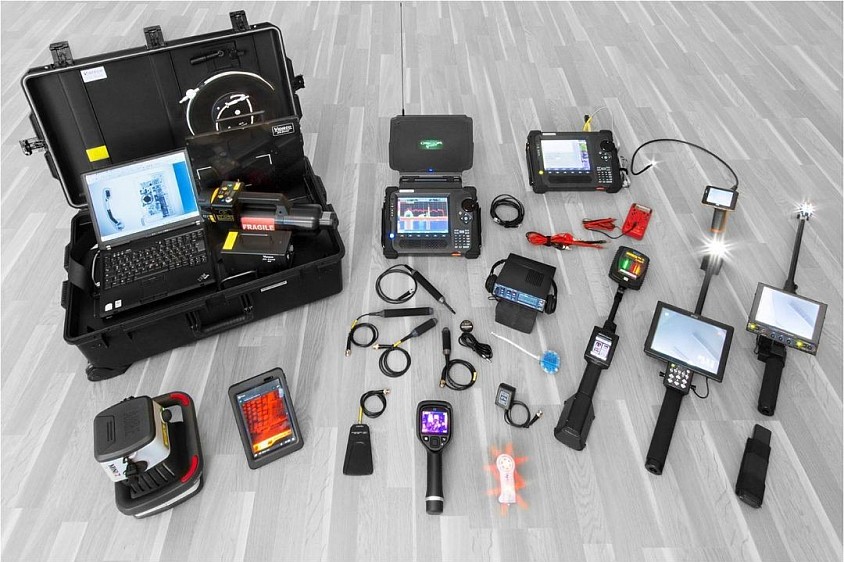
Technical Surveillance Countermeasures (TSCM) represent a specialized risk-mitigation protocol engineered to detect, isolate, and neutralize unauthorized eavesdropping devices, covert surveillance hardware, and physical technical vulnerabilities within enterprise environments.
As corporate espionage mechanisms grow increasingly sophisticated, implementing systematic countermeasures is vital for protecting high-value intellectual property, executive communications, and core strategic assets.
1. Operational Protocol & First-Response Imperatives
The efficacy of a counter-surveillance operation depends heavily on pre-deployment operational security (OPSEC). Compromised operational protocols frequently alert unauthorized actors, giving them time to remotely deactivate, remove, or suppress active surveillance hardware.
• OPSEC Communication Hygiene: Never discuss suspected technical compromises, schedule audits, or contact TSCM specialists from within suspect facilities or via corporate networks.
• Off-Site Channel Selection: Initiate all inquiries using secure, uncompromised off-site channels (such as personal mobile devices completely removed from the targeted property).
• Maintenance of Baseline Operations: Maintain standard daily workplace routines to avoid raising suspicion or signaling an impending technical audit to potential threats.
2. Threat Spectrum & Detection Scope
Professional corporate sweeps utilize specialized instrumentation to audit hardware spanning active, passive, and dormant threat vectors:
• Audio Interception Systems: Concealed miniature microphones and wiretaps integrated into physical architecture, fixtures, furniture, or HVAC infrastructure.
• Optical & Video Surveillance: Micro-aperture pinhole cameras capturing optical intelligence, transmitting via dedicated signals, or recording locally to embedded media.
• Radio Frequency (RF) & Cellular Transmitters: Unauthorized devices transmitting real-time intelligence over cellular bands (GSM/3G/4G/LTE/5G), Wi-Fi, Bluetooth, or customized RF spectrums.
• Hardwired Infrastructure Modifications: Physical taps, line splices, and unauthorized modifications across PSTN lines, Ethernet links, VoIP endpoints, and integrated audiovisual hardware.
• Dormant & Burst Transmitters: Advanced surveillance payloads configured to remain dormant, operating on duty cycles, or transmitting encrypted data bursts to evade basic sweep tools.
3. Methodological Framework
Enterprise TSCM deployments adhere to a multi-tiered diagnostic standard, avoiding reliance on consumer-grade detection tools:
1. Phase I: Pre-Assessment & Threat Modeling Establish operational parameters, conduct preliminary threat analysis, and review facility architecture.
2. Phase II: Radio Frequency (RF) Spectrum Analysis Perform continuous spectrum analysis across the electromagnetic spectrum to detect ambient RF anomalies, unauthorized transmissions, and signal bursts.
3. Phase III: Physical, Visual & Thermal Inspection Conduct meticulous physical inspections utilizing non-linear junction detectors (NLJD), thermal imaging, and optical lens locators.
4. Phase IV: Line & Network Infrastructure Audit Inspect power distribution networks, telecommunications lines, and IP-based hardware for unauthorized splices or signal leakage.
5. Phase V: Analytical Reporting & Remediation Strategy Deliver a formal technical report outlining physical findings, detected vulnerabilities, structural risks, and actionable security enhancements.
4. Strategic Audit Windows
While high-security organizations integrate periodic sweep schedules into their baseline security policy, targeted deployments are recommended during critical enterprise triggers:
• M&A and High-Stakes Negotiations: Prior to sensitive board meetings, major mergers, acquisitions, or restructuring discussions.
• Unexplained Information Disclosure: Immediately following the unexpected leakage of proprietary trade secrets, competitive tender bids, or financial intelligence.
• Executive Restructuring: Concurrently with high-level executive departures, hostile litigation, or internal employment disputes.
• Facility Expansion & Off-Site Events: Prior to taking occupancy of new real estate or hosting confidential off-site strategy summits at third-party venues.
